Here's our muscle contraction video!
My blog is about my experiences in this anatomy and physiology class. It serves as a journal to record my growth throughout the year.
Sunday, March 27, 2016
Unit 7 Reflection
Thursday, March 24, 2016
Performance Enhancement Ad: High Protein Diets
Performance enhancing substances have more risks than benefits. The stereotype that men have to be super muscular and women have to be super thin is definitely a very dangerous stereotype that is portrayed in the media. Athletes also have a lot of peer and parental pressure to be the best they can be, leading them to believe that performance enhancement substances are the only way to achieve their goals. Even though, performance enhancements can boost athletic performance, build muscle, and help with weight loss, the long term effects can be very harmful. For example, a high protein diet may help you get a six-pack but it will also increase LDL levels and build up toxic ketones in the body. Caffeine seems harmless but it can cause dehydration, heat stroke, insomnia, and can lead to addiction. In all, I think the best way to enhance performance is to work hard.
Monday, March 21, 2016
Chicken Dissection Analysis
This week we dissected a chicken! I have a much better understanding of the muscles now; it was really helpful to see the muscles attached to the bones and the tendons in front of me instead of on a paper. Signals from our brain are sent to muscles so that we can move. Tendons connect the muscles to the bone and help the muscles pull on the bones. While stretching, muscles move the bones by working together. For example, we are able to bend our elbow because the biceps and the triceps work together. When you bend your elbow, the bicep muscle contracts and the triceps muscle is stretched out. A big difference in the tendon of the insertion and the tendon of the origin is where they are located. Insertion is the movable end of the muscle, while origin is the immovable end of the muscle. The tendon of the insertion has to be more flexible than the tendon at the origin.
Chicken muscles are pretty similar to human muscles function wise. For example, the wing muscles of the chicken was similar to the muscles in a human arm. In both the chicken and human, the biceps brachii flexes the elbow joint. The deltoid of the chicken also looked similar to a human deltoid in size and shape. There were also muscles that were very different in shape, like the trapezius. The chicken's trapezius ran from the backbone to the shoulder of the bird. In a human, the trapezius is split into two parts: one up the neck and one along the back. The whole front part the chicken was the pectoralis major. There was no rectus abdominus or external obliques in the chicken as there are in humans.
Here are the pictures we took!
Chicken muscles are pretty similar to human muscles function wise. For example, the wing muscles of the chicken was similar to the muscles in a human arm. In both the chicken and human, the biceps brachii flexes the elbow joint. The deltoid of the chicken also looked similar to a human deltoid in size and shape. There were also muscles that were very different in shape, like the trapezius. The chicken's trapezius ran from the backbone to the shoulder of the bird. In a human, the trapezius is split into two parts: one up the neck and one along the back. The whole front part the chicken was the pectoralis major. There was no rectus abdominus or external obliques in the chicken as there are in humans.
Here are the pictures we took!
| The sartorius is the longest muscle in the body. It is responsible for lateral hip rotation and flexion of the thigh and knee, |
| The triceps humeralis extends the wing (birds) or arm. |
| The trapezius extends the head. It also elevates and depresses the scapula. |
The pectoralis minor pulls the shoulder down and forward.
|
| The deltoid is responsible for the abduction, flexion, and extension of the arm. |
| The biceps femoris is part of the hamstring group. It flexes the lower leg. |
| The biceps brachii flexes the elbow joint. |
| The iliotibialis extends the thigh and flexes the leg. |
| The latissimus dorsi extends, adducts, and rotates the arm medially. |
| The semitendinosus is anterior and medial to the inner thigh. It works with the semimembranosus to extend the thigh. |
| The gastrocnemius is the primary muscle of the posterior and medial sides of the drumstick. |
| The brachioradialis flexes the forearm at the elbow. It is responsible for pronation and supination. |
| The pectoralis major pull the wings of a bird ventrally so they can fly. In a human, the muscle flexes, adducts, and rotates the arm. |
The peroneus longus is responsible for the extension of the foot. |
Monday, March 14, 2016
What Happens When You Stretch?
This article explained what stretching is and the effects of stretching on muscles. I learned why stretching caused flexibility from an anatomical perspective. I learned that connective tissue plays a big role in stretching; it's helps when a muscle is stretched further than normal. Stretching realigns fibers and fixed scarred tissue, which explains why stretching helps with soreness. The article also explained reciprocal inhibition and how the muscles contract and relax to cause a desired motion. I thought the most interesting part of the article was how muscle spindles work. Sudden changes in muscle length can cause strong muscle contractions so muscle spindles help maintain muscle tone and prevent injuries. You could even train the stretch reflex of the muscles, increasing flexibility.
-"The more fibers stretched, the more length developed by the muscle for a given stretch." (1) - this gave me a better understanding of flexibility of the muscle. I knew that stretching got rid of soreness, but I did not know how that correlated with muscle fibers.
-"as you hold the muscle in a stretched position, the muscle spindle habituates and reduces its signaling" (3) - this explained why people must stretch every day in order to be able to do a split or just touch their toes. After a while, the muscle is able to stretch further and further because of the reduction of signaling.
-"When you stretch your calf, you want to contract the shin muscles by flexing your foot. However, the hamstrings use the calf as a synergist so you want to also relax the hamstrings by contracting the quadricep" (2) - I found it interesting how simply flexing the foot could affect multiple muscles as far up as the quads and hamstrings. It's like a chain reaction; each muscle lifts up another muscle.
-"The more fibers stretched, the more length developed by the muscle for a given stretch." (1) - this gave me a better understanding of flexibility of the muscle. I knew that stretching got rid of soreness, but I did not know how that correlated with muscle fibers.
-"as you hold the muscle in a stretched position, the muscle spindle habituates and reduces its signaling" (3) - this explained why people must stretch every day in order to be able to do a split or just touch their toes. After a while, the muscle is able to stretch further and further because of the reduction of signaling.
-"When you stretch your calf, you want to contract the shin muscles by flexing your foot. However, the hamstrings use the calf as a synergist so you want to also relax the hamstrings by contracting the quadricep" (2) - I found it interesting how simply flexing the foot could affect multiple muscles as far up as the quads and hamstrings. It's like a chain reaction; each muscle lifts up another muscle.
Saturday, February 27, 2016
Unit 6 Reflection
Unit 6 was all about the skeletal system. First, we learned about the different types of bones, what bones are made of, and how they repair themselves. The axial bones are the bones that make up our foundation and protect our organs. The appendicular bones help us with movement. Bones are classified by their shape: long, short, flat, and irregular. The two types of bone tissue of bone are compact and spongy. The cells that are responsible for bone remodeling are osteocytes, osteoblasts, and osteoclasts. Osteoblasts are bone forming cells and osteoclasts are bone destroying cells. Next, we learned about the disorders of the skeletal system like arthritis. Osteoporosis and rickets are caused by a deficiency in vitamins and minerals. We also learned about kyphosis, lordosis, and scoliosis which are all diseases relating to an abnormal curvature of the spine. Lastly, we learned the names of all the bones and the different kinds of joints.
I want to learn more about the cures for bone diseases, if any. Do you have to live with the disease forever or are some of the diseases reversible? For example, osteoporosis is by loss of minerals in the bones, making them more brittle. Does this mean a person with osteoporosis just needs to have more minerals in their diet or is there something more? I would also like to learn more about the similarities and differences between human bones and other animal bones because of the owl pellet lab. So far this semester has been going well and I've been keeping up with my New Years goals.
Thursday, February 25, 2016
Owl Pellet Lab
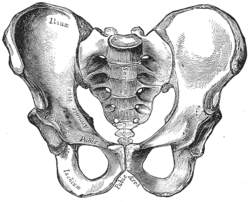
| human pelvis |
![]() |
| human tibia & fibula |

Thursday, January 28, 2016
Unit 5 Reflection
Unit 5 was about the digestive system, endocrine system, and lymphatic system. We learned about the organs involved in the systems and all their functions. To further understand the digestive system we measured our alimentary canal and made it with string and ribbon. We learned about fuel metabolism and the fed, fasting, and starvation states. We went over how our organs work in different conditions, for example how the brain uses glucose for fuel and the muscles can use glucose, fatty acids, and ketone bodies for fuel. We learned a lot about insulin and glucagon, two hormones that regulate blood glucose levels. A big part of this unit was about diabetes, which I didn't know much about at first. Now I have a greater understanding of the way insulin works in our bodies and how diabetes can be caused by so many different factors such as genetics, stress, and physical inactivity.
I enjoyed learning about the body systems because they were pretty straightforward. I struggled a little with understanding fuel metabolism because there were so many steps and hormones that played a part in the whole process. I wanted to learn more about metabolism and lactose intolerance and I got the chance to when we had researched and discussed articles in class. So far I have been keeping up with my New Year's goals. I still need to work on getting 7-8 hours of sleep everyday but I have cut down on my screen time.
Subscribe to:
Posts (Atom)